In six seconds, you’ll hate me.
But in six months, you’ll be a better writer.
From this point forward – at least for the next half year – you may not use “thought” verbs. These include: Thinks, Knows, Understands, Realizes, Believes, Wants, Remembers, Imagines, Desires, and a hundred others you love to use.
The list should also include: Loves and Hates.
And it should include: Is and Has, but we’ll get to those, later.
Until some time around Christmas, you can’t write: Kenny wondered if Monica didn’t like him going out at night…”
Instead, you’ll have to Un-pack that to something like: “The mornings after Kenny had stayed out, beyond the last bus, until he’d had to bum a ride or pay for a cab and got home to find Monica faking sleep, faking because she never slept that quiet, those mornings, she’d only put her own cup of coffee in the microwave. Never his.”
Instead of characters knowing anything, you must now present the details that allow the reader to know them. Instead of a character wanting something, you must now describe the thing so that the reader wants it.
Instead of saying: “Adam knew Gwen liked him.”
You’ll have to say: “Between classes, Gwen was always leaned on his locker when he’d go to open it. She’d roll her eyes and shove off with one foot, leaving a black-heel mark on the painted metal, but she also left the smell of her perfume. The combination lock would still be warm from her ass. And the next break, Gwen would be leaned there, again.”
In short, no more short-cuts. Only specific sensory detail: action, smell, taste, sound, and feeling.
Typically, writers use these “thought” verbs at the beginning of a paragraph (In this form, you can call them “Thesis Statements” and I’ll rail against those, later) In a way, they state the intention of the paragraph. And what follows, illustrates them.
For example:
“Brenda knew she’d never make the deadline. Traffic was backed up from the bridge, past the first eight or nine exits. Her cell phone battery was dead. At home, the dogs would need to go out, or there would be a mess to clean up. Plus, she’d promised to water the plants for her neighbor…”
Do you see how the opening “thesis statement” steals the thunder of what follows? Don’t do it.
If nothing else, cut the opening sentence and place it after all the others. Better yet, transplant it and change it to: Brenda would never make the deadline.
Thinking is abstract. Knowing and believing are intangible. Your story will always be stronger if you just show the physical actions and details of your characters and allow your reader to do the thinking and knowing. And loving and hating.
Don’t tell your reader: “Lisa hated Tom.”
Instead, make your case like a lawyer in court, detail by detail. Present each piece of evidence. For example:
“During role call, in the breath after the teacher said Tom’s name, in that moment before he could answer, right then, Lisa would whisper-shout: ‘Butt Wipe,” just as Tom was saying, ‘Here’.”
One of the most-common mistakes that beginning writers make is leaving their characters alone. Writing, you may be alone. Reading, your audience may be alone. But your character should spend very, very little time alone. Because a solitary character starts thinking or worrying or wondering.
For example: Waiting for the bus, Mark started to worry about how long the trip would take..”
A better break-down might be: “The schedule said the bus would come by at noon, but Mark’s watch said it was already 11:57. You could see all the way down the road, as far as the Mall, and not see a bus. No doubt, the driver was parked at the turn-around, the far end of the line, taking a nap. The driver was kicked back, asleep, and Mark was going to be late. Or worse, the driver was drinking, and he’d pull up drunk and charge Mark seventy-five cents for death in a fiery traffic accident…”
A character alone must lapse into fantasy or memory, but even then you can’t use “thought” verbs or any of their abstract relatives.
Oh, and you can just forget about using the verbs forget and remember.
No more transitions such as: “Wanda remember how Nelson used to brush her hair.”
Instead: “Back in their sophomore year, Nelson used to brush her hair with smooth, long strokes of his hand.”
Again, Un-pack. Don’t take short-cuts.
Better yet, get your character with another character, fast. Get them together and get the action started. Let their actions and words show their thoughts. You -- stay out of their heads.
And while you’re avoiding “thought” verbs, be very wary about using the bland verbs “is” and “have.”
For example:
“Ann’s eyes are blue.”
“Ann has blue eyes.”
Versus:
“Ann coughed and waved one hand past her face, clearing the cigarette smoke from her eyes, blue eyes, before she smiled…”
Instead of bland “is” and “has” statements, try burying your details of what a character has or is, in actions or gestures. At its most basic, this is showing your story instead of telling it.
And forever after, once you’ve learned to Un-pack your characters, you’ll hate the lazy writer who settles for: “Jim sat beside the telephone, wondering why Amanda didn’t call.”
Please. For now, hate me all you want, but don’t use “thought” verbs. After Christmas, go crazy, but I’d bet money you won’t.
For this month’s homework
...pick through your writing and circle every “thought” verb. Then, find some way to eliminate it. Kill it by Un-packing it.
Then, pick through some published fiction and do the same thing. Be ruthless.
“Marty imagined fish, jumping in the moonlight…”
“Nancy recalled the way the wine tasted…”
“Larry knew he was a dead man…”
Find them. After that, find a way to re-write them. Make them stronger.
Thanks for last month’s questions. If you have more, submit them, and I’ll get to them in mid-June.
If You're Thirsting For More Writing Lessons From Chuck
We Have 35 More Of Them Right Here!
*Photo credit: Yasmina Moya
About the author
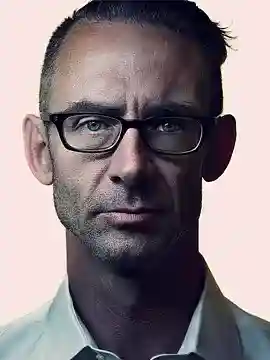
Chuck Palahniuk is author of the novels Fight Club, Survivor, Invisible Monsters, Choke, Lullaby, Diary, Haunted, Rant, Snuff, Pygmy, Tell-All, Damned, Doomed, and the upcoming Beautiful You. He also has two non-fiction books, the Portland travel memoir Fugitives & Refugees and the collection of true stories, essays, and interviews, Stranger Than Fiction.