The writer Joy Williams says, “A writer must be smart but not too smart. He must be dumb enough to break himself to harness.” In July, those words are especially true. In summer, most workshops fall apart. No one brings new pages. Most of writing isn’t the brainstorming, exciting flashes of idea that come so fast. Most of writing is the moment-by-moment choice of details that will create your physical reality on the page.
Even now, I’m only aware of the music playing (country and western), the rushing sound of the fan, the keyboard, and the computer screen. A limited number of physical details make up every reality – one smell (on none), one texture, one sound. One gesture or nervous tic. If you can get those right -- choose them and depict them well -- your scene will write itself.
As an aside, ask yourself: “What is your character doing when he or she isn’t doing anything?” Again, what’s happening with hands, feet, tongue, breathing?
This is the plodding, hit-or-miss, try-and-fail, job of writing and re-writing.
That said, I hate similes. Those phrases that compare one thing to another. “Her hair had the softness of rabbit’s fur.” Or, “His cheeks were like raw meat.”
Anytime you want to use a simile, a metaphor will usually work better. Stronger. Instead of: “Being married to Jim was like driving five years down a dirt road”… the stronger version is: “Being married to Jim was five years of driving down a dirt road.” Or better yet, “Being married to Jim left you shaky as a five-year drive down a dirt road.”
But if you’re determined to use a simile, try the following:
Avoid using forms of the verb “is.” As in, “Her car was green as a traffic light.” Or, “His job is as boring as church.” Instead, unpack the “is” verb and determine the quality you want to highlight with the comparison. For example even, “Her car looked (or “shined” or “streaked past”) green as a traffic light.” Or, “His job felt as boring as sitting in church.” In short, unpack the verbs that link one subject with the other.
Limit your similes. Every time you compare something inside of a scene to something that’s not present, you distract your reader – taking them out of the moment – and losing energy. “The preacher’s hands were like pale birds,” forces us to picture birds, then maybe doves, maybe some other white birds, pigeons, nesting or flying, blue sky, clouds, and we’re lost. To avoid this, use only your strongest similes, and try to reuse them. Consider, “The preacher’s pale hands curled together in his lap, nested still and tight as a pair of dead birds.” Again, unpack the verbs – exactly how is one thing similar to the other. And describe the actual item before comparing it to something else.
Beyond that, consider monkeying with your similes. If you have to use a comparison, linger on it, over-do it. I loved doing this in Lullaby. For example, “Her blouse was the same pink as strawberry sherbet, but sherbet served on a green Haviland dessert plate on a tablecloth of Belgian lace beside a window overlooking Paris.” Whether you pile up the qualifiers this way, or find another method to over-extend and re-invent your similes, they’ll still be stronger than too many, simple, distracting comparisons.
Most important: Rephrase your similes to avoid using the word “like.” Consider: “The woman breathed fast as a dog, panting.” Dropping words is a very “voicy” human tendency. Not every “blank as blank” comparison has to include every “as.” Or, “The man stood the same height as the door beside him.” A comparison with no “like.” Or, “How Brenda swatted the fly, without looking, she could’ve been swatting Russ.”
Now, use similes if you must, but don’t let them weaken your story.
This brings us to three types of words to still avoid:
“Like” comparisons.
“Is” and “has” verbs (“the dog had a limp” is never has strong as “the dog walked with a limp”).
And, the dreaded “thought” verbs such as, “knew, realized, believed, worried, understood,” that let you spoon feed your reader, instead of letting the reader think.
For homework, take a printed hard copy of your work outside. A story or a whole manuscript. Carry it around to the beach or work or the airport, and line edit, looking for the above weaknesses.
Strike out the word “like,” every time you find it. Then, rephrase the sentence to make it stronger. Keep marking your hard copy until the weather turns to rain, or you get a blistering sunburn – then, you’ll have the permission you need to stay indoors and revise your work. After that, print another hard copy and get back outside.
If you’re serious about writing, this summer you might look for the book Copy and Compose by Winston Weathers and Otis Winchester. The edition I have is copyrighted 1969, so it’s a tough book to track down. My thanks to Erik Hedegaard of Rolling Stone, who recommended it. Here’s a simple guide to rhetoric and dozens of different ways you can vary sentence structure for a better effect.
Well, don’t pin a medal on me. “Guts” didn’t win the Bram Stoker award.
My North American book tour is done for the year, and I’m going back to work on another idea. If you’re waiting for a mailing window, I’ll be ready next spring – only after I have a finished first draft of the next book.
My thanks to the people who came to the events. If your writers workshop falls apart during the summer months, consider going to local bookstore events. Some of the best writers are touring this summer, and there’s something you can learn/steal/borrow from each of them. If nothing else, it’s important to see that your goal is something done by human beings no smarter or stronger or more anything than yourself. Keep telling yourself: “If that horse’s ass can write a book and find a publisher, then it should be easy for me…” Even if the sun is shining, outside.
And again, thank you for reading my work.
About the author
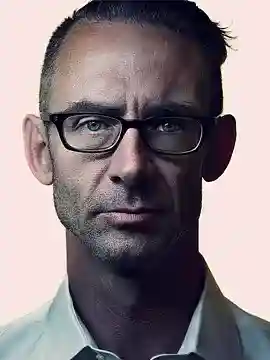
Chuck Palahniuk is author of the novels Fight Club, Survivor, Invisible Monsters, Choke, Lullaby, Diary, Haunted, Rant, Snuff, Pygmy, Tell-All, Damned, Doomed, and the upcoming Beautiful You. He also has two non-fiction books, the Portland travel memoir Fugitives & Refugees and the collection of true stories, essays, and interviews, Stranger Than Fiction.