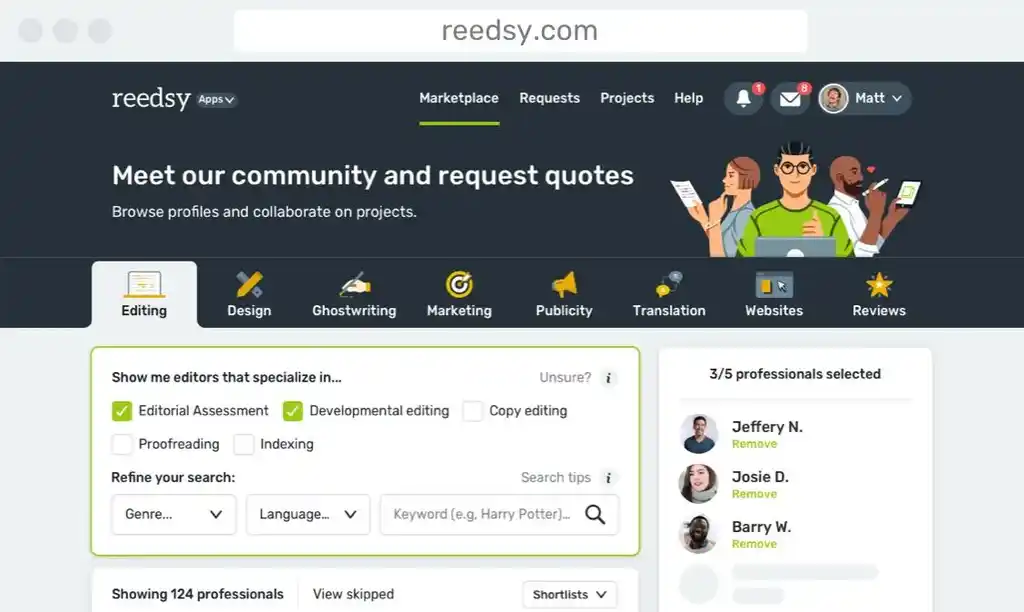
AI might be transforming how we work, but its place in creative fields remains a contentious topic for many. Book editing is no exception — for some authors, the allure of a cheap and speedy editing job can be hard to ignore.
But should you use AI to edit your book? More importantly: is it even capable of it? We ran an experiment on each stage of the editing process to find out.
Developmental editing
This is the deepest, most demanding edit your story will go through. Developmental editing is concerned with big picture elements like plot, character arcs, and theme, all of which are deeply subjective.
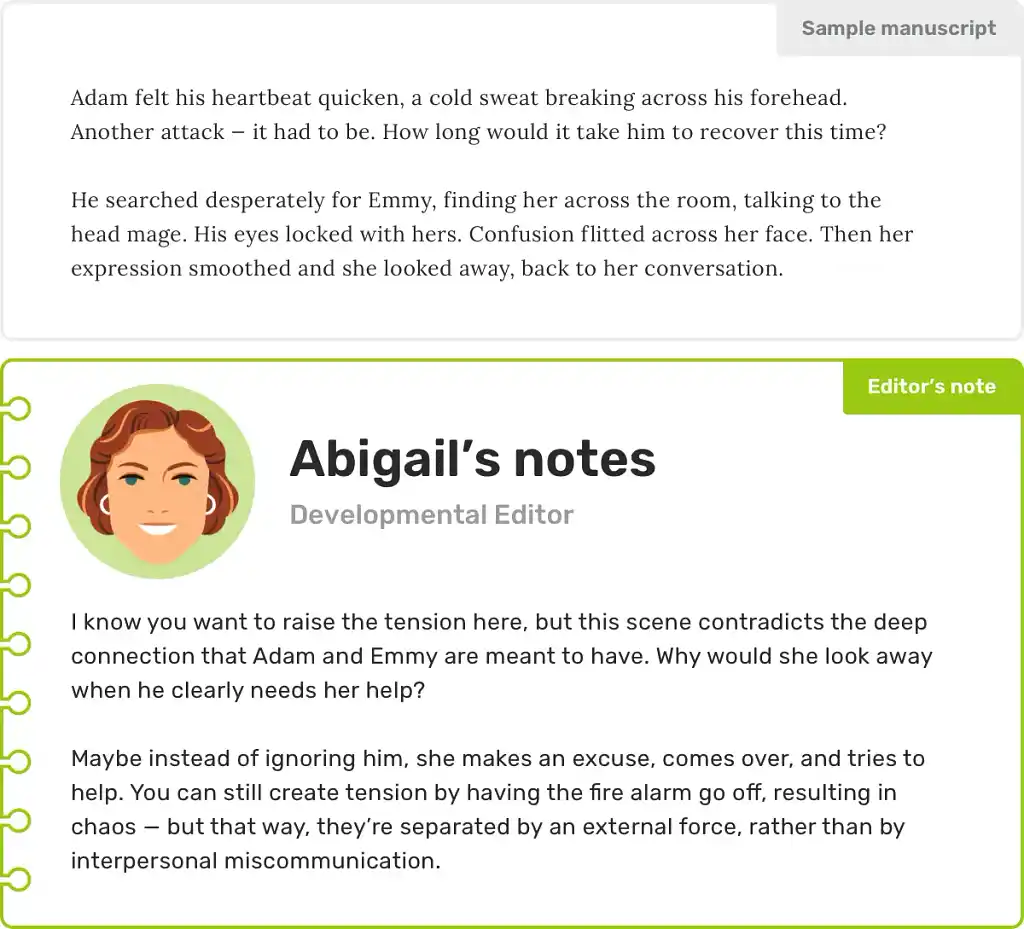
To see how an AI handles that kind of work, we ran an early draft through an LLM (specifically, Claude Opus 4.8) for a full developmental assessment. The manuscript belonged to writer Ali El Hajj, who kindly lent us his upcoming fantasy novel, The Vow of Gaea.
At first glance, it didn’t do a bad job. Claude identified a few elements that Ali was already planning to adjust in his next draft, including a meandering sequence that needed tightening, and a supporting character, Celeste, who could do with a little more development.
But while an AI edit may flag a valid issue with your story here and there, it’s still a far cry from what you’d get out of a professional developmental edit. Most notably, Claude had nothing to say about the relationship between the two leads, which is the main area Ali is looking to improve in future drafts, and something he’s confident that a human editor would’ve picked up on.
Another major priority for Ali's next draft is an act one overhaul. Claude did flag that the opening felt repetitive, but it didn't question why the act wasn't working, nor did it push Ali to reconsider the specific elements he’s planning to improve (like the setting).
Perhaps most crucially of all, AI didn’t raise anything that Ali wasn’t already aware of. For a developmental edit, you’d expect to get feedback on story elements that you hadn’t previously considered, rather than things you’re already planning to adjust.
Copy editing
Okay, so you can't substitute your developmental editor with an AI. But copy editing happens at the sentence level, not the structural one, so maybe a machine can manage it? Not quite.
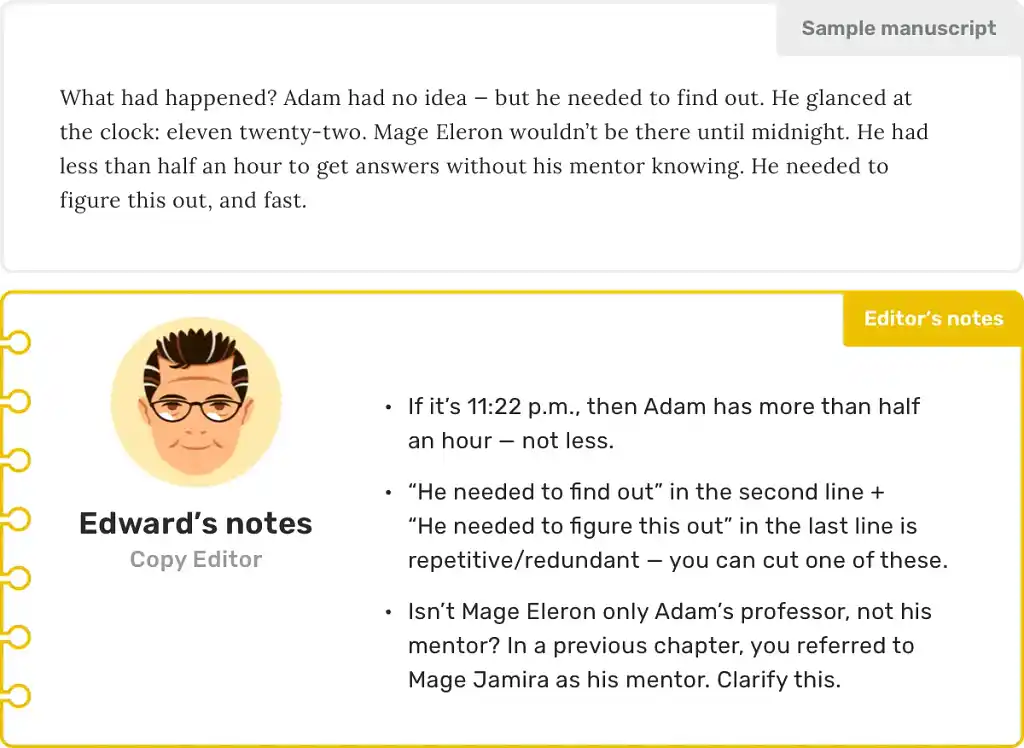
An AI program may be able to spot a sentence it considers awkward, but it can’t recognize whether that cadence is deliberate. As Ted Chiang from The New Yorker puts it:
“AI has to fill in the choices you are not making… one way is to take the average of choices that other writers have made, as represented by text found on the internet; that average is equivalent to the least interesting choices possible.”
To see this in action, we asked Claude to copy edit a paragraph from one of the most acclaimed novels of the last few years: Intermezzo by Sally Rooney. This book is lauded for its bold, experimental style that bends the conventions of capitalization and grammar, and the opening chapter is publicly available on its Amazon page.
If AI can parse intentional prose from genuine error, it should leave an excerpt like this well alone. And while Claude does correctly identify that this is “a stylized passage,” it also insists that the only things it flagged were “genuine issues”. Here are a few of its recommendations:
- "Down the staircase and into her room without seeing any of the others." — No subject, and "she" was the last actor named, so the movement is ambiguous. Anchor it: "He follows her down the staircase..."
- "In whose blent air all our compulsions meet." — Deliberate echo of Hopkins's "The Windhover," and the one line that breaks the clipped present-tense surface. Confirm the register shift is the effect you want.
- "sweetheart" — Reads as affectionate or condescending depending on their dynamic. Confirm it lands the way you intend right before the reveal.
The first suggestion misreads an intentional stylistic choice as a grammatical mistake. The following two are even more egregious: Claude can't decide whether Rooney’s choices are deliberate, so it hands the judgment back to us. A human editor would’ve discussed these choices with the author, and helped her decide whether they worked.
An editor incapable of refining your voice isn't worth much. Had Rooney taken an LLM’s advice on her prose, the same stylized edge that earned her widespread literary acclaim would have been sanded off.
Proofreading
Unlike developmental and copy editing, proofreading is mostly mechanical — catching typos and missing punctuation should be firmly inside an AI’s wheelhouse. And indeed, when presented with an error-ridden passage, Claude correctly identified every mistake we planted.
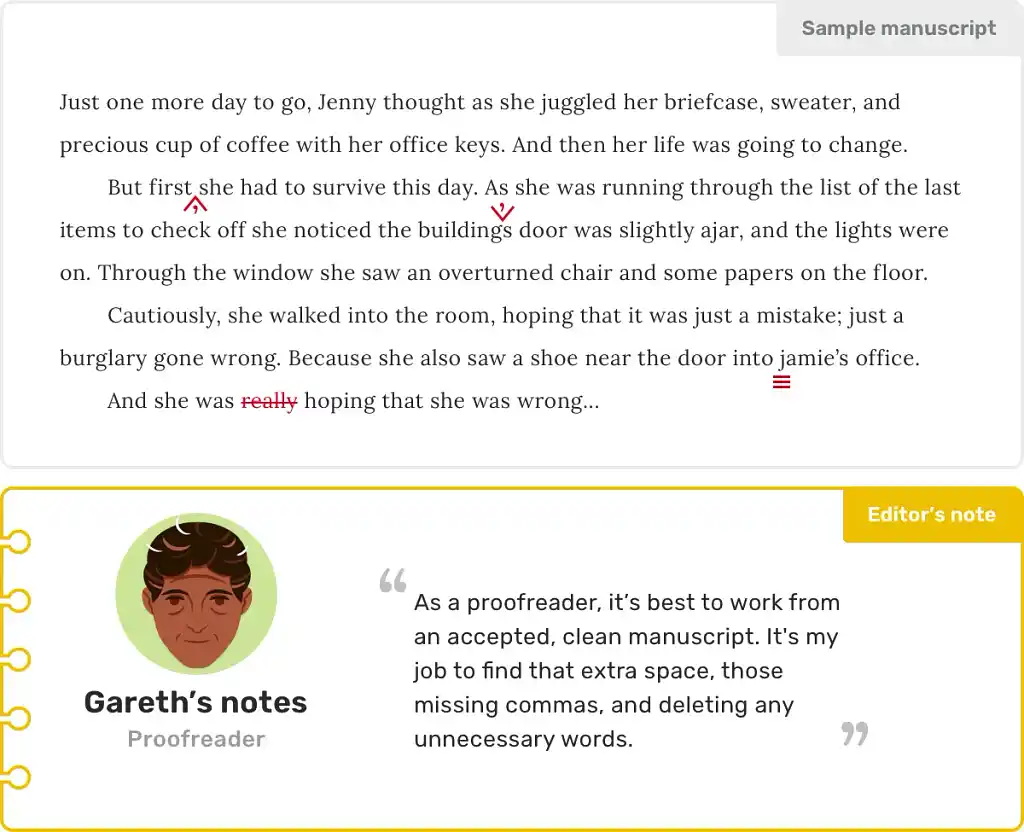
AI may spot surface-level mistakes well enough, but we’d caution against hiring Claude over a seasoned professional. Leave the final check in the hands (code?) of an AI, and you'd have no way of knowing whether an error has slipped through the cracks until a reader points it out.
A computer can't take responsibility for the mistakes it misses. To be sure, you'd have to comb through the whole thing yourself, which sort of defeats the point. If you want absolute peace of mind, hire a proofreader.
AI works well enough for the small stuff, but it's a poor substitute for an actual editor. No model can untangle your story’s structure, understand the intricacies of your prose, or give you the confidence to hit print on the finished product. For that, you still need a human in your corner.
About the author
Nick Bailey writes about anything and everything in the realm of writing and publishing. From articles on honing your craft to launching your book, Nick aims to provide valuable insights and practical tips to the Litreactor community in his posts. Aside from books, Nick enjoys hiking, electronic music, and filling up his personal cookbook with new recipes.