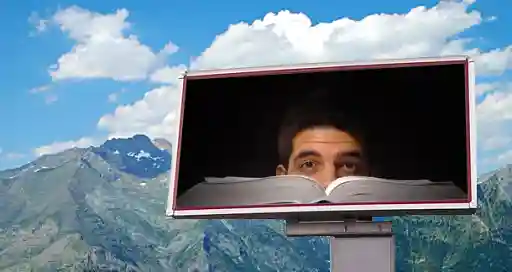
A man approached me once as I was stocking bookshelves in a store and said smugly, "I've read two books in my entire life. What do you think of that?" He then pointed to a copy of Fifty Shades of Grey and remarked that he couldn't see why people wasted their money on such garbage.
I believe he was trying to impress upon me how successful life (his life, specifically) could be without all sorts of pesky reading, and that my customers were wasting their hard-earned dollars on frivolities. I also think he was expecting a bit more of a reaction from me, but I didn't offer much other than a weak smile and nod at the time, repulsed and eager to finish my work. About a year has passed since then, and I feel ready to return to the man's question: what do I think?
False Bravado
First of all, I don't think he's alone. A 2013 questionnaire showed that 28 percent of adults polled had not read a single book in the past year. No one is born with a natural aversion to reading, but a combination of factors can dissuade people from it at an early age. Students might develop a dislike of reading if they're afraid of being told their opinion on a book is "wrong," or if they're regularly singled out and put into a group of "slow" readers. Like Pavlov's dog, we're wired to reject experiences that cause us pain or humiliation, even as years pass and the exact event that caused the discomfort is forgotten. I'll never know for sure, but the bravado of the man I met could very well have been a cover for something that was a longtime source of insecurity.
Fiction in particular also has a reputation for being impractical. All English majors experience an eye roll or two at some point, accompanied by the inevitable ironic inquiry about how the Starbucks job is going. It's an attitude that extends into the recreational purchase of novels as well, as the immediate benefits of consuming fiction are not as obvious as picking up a non-fiction title and learning a language or business skills. I once overheard this conversation between a married couple in a (Boston) restaurant: "She gave me a Bahnes and Noble gift cahd. What the hell am I supposed to do with that?" The woman's husband muttered something about buying cookbooks with it, because at least cookbooks have a use.
Whole Worlds to Gain
As I cried into my entrée, I thought to inform this couple that every dollar invested in the improvement of adult literacy yields $7.14 in return. Completely tossing aside the cultural value of books, low literacy rates cost U.S. employers $80 billion every year in lost worker productivity. Reading also has physical benefits, such as reduced stress and blood pressure. It's one way to stave off Alzheimer's disease, a debilitating health epidemic that has no known cure. Suddenly, the decline of the English major starts to seem rather unfortunate.
So, how can book lovers entice non-readers into the light? If I ever meet that man who thought reading was a waste again, I know what I'd d—I would tell him a story. I'd tell him everything I just wrote here, as well as my favorite parts of Lord of the Rings, The Shadow of the Wind, and The Master and Margarita. I'd ask his favorite movies and try to make recommendations from there, because the only way to convince someone to do what they perceive as an unpleasant task is to make them see the value in it for them. I'm certain there will be more people in the future who tell me, "I don't read." But next time, I won't say, "You're wrong. This is what you're losing out on." Instead, I'll try my best to let them know that they have entire worlds to gain.
Have you ever had someone proudly tell you they don't read? How did you respond? Would you respond differently in the future?
About the author
Leah Dearborn is a Boston-based writer with a bachelor’s degree in journalism and a master’s degree in international relations from UMass Boston. She started writing for LitReactor in 2013 while paying her way through journalism school and hopping between bookstore jobs (R.I.P. Borders). In the years since, she’s written articles about everything from colonial poisoning plots to city council plans for using owls as pest control. If it’s a little strange, she’s probably interested.